
Introduction
In a world increasingly dominated by streaming services and digital downloads, the digipackage has quietly held its ground, and in recent years, it has experienced a notable resurgence. Whether you are a musician releasing your debut album, a filmmaker distributing a limited-edition DVD, or simply a collector seeking a premium product, understanding what a digipackage is and how it functions can help you make more informed decisions about physical media.
This guide covers everything you need to know about the digipackage: its structure, types, advantages, limitations, and its role in today’s evolving media landscape.
What Is a Digipackage?
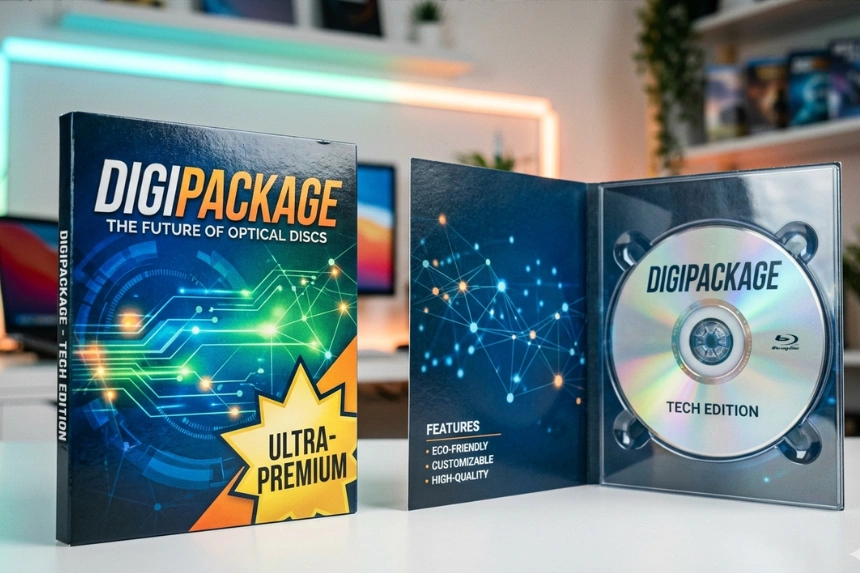
A digipackage, commonly spelled as “digipak” or “digipack”, is a cardboard-based case designed to hold one or more optical discs, typically CDs, DVDs, or Blu-ray discs. Unlike the traditional plastic jewel case, a digipackage is constructed primarily from custom-printed cardboard, with a plastic tray (known as a flexi-tray) glued inside to securely hold the disc in place.
The outer shell of the digipackage serves as a full-colour printed canvas. Artists and filmmakers use this surface to display album artwork, film covers, lyrics, thank-you notes, promotional material, and song lists. The result is a product that functions not just as packaging, but as a tangible extension of the creative work it contains.
How Is a Digipackage Structured?
The most widely used digipackage format is the 4-panel configuration, which opens like a book. The front and back panels carry the primary artwork, while the inner panels provide space for the disc tray and additional content. From there, manufacturers offer expanded layouts:
- 6-panel digipackage: Adds an extra fold, allowing room for a second disc tray or expanded artwork and liner notes.
- 8-panel digipackage: Offers the most surface area, suitable for multi-disc releases or products with extensive supplementary content.
Each configuration can accommodate single or multiple discs, and many formats include a pocket or sleeve to house a printed booklet. The exterior is typically finished with a gloss or matte UV coating, which enhances durability and visual appeal.
Digipackage vs. Jewel Case: What Sets Them Apart?
The jewel case has been the standard for disc packaging since the early days of the compact disc format. Made from semi-flexible polypropylene plastic, it provides solid protection and a standardized size. However, it offers limited space for visual customization—usually restricted to a front insert and a rear panel.
The digipackage differentiates itself in several key ways:
Customization and visual impact: Because the entire outer surface is printable cardboard, the digipackage allows for wrap-around artwork, detailed typography, and immersive visual design. This makes it particularly appealing for musicians and filmmakers who want their packaging to reflect the quality and identity of their work.
Sustainability: The digipackage uses significantly less plastic than a jewel case. According to packaging specialists, digipackages can produce up to 80% fewer carbon emissions during manufacturing compared to full-plastic jewel cases. The cardboard used is often sourced from managed forests and certified under sustainability frameworks.
Durability trade-offs: While the cardboard construction prevents the cracking and shattering commonly associated with plastic jewel cases, it is more susceptible to moisture and general wear over time. Corners and fold lines are the most vulnerable areas, particularly without a protective coating.
Cost: Digipackages are generally more expensive to produce than jewel cases, though the price gap has narrowed considerably as the format has scaled in popularity.
What Are the Main Types of Digipackage?
Understanding the available formats helps in choosing the right digipackage for a given project.
1. Standard 4-Panel Digipackage
This is the most common format and the default choice for most single-disc releases. It provides two inner surfaces for artwork or text, alongside the disc tray. The compact size and book-style opening make it intuitive for consumers and cost-effective for manufacturers.
2. Multi-Panel and Multi-Disc Formats
For more complex releases, such as deluxe editions, box sets, or film collections, 6-panel and 8-panel configurations offer greater flexibility. These formats can hold two, three, or even four discs, alongside booklets and promotional inserts.
3. Eco-Digipackage
A growing segment of the market now offers digipackages that replace the plastic flexi-tray with biodegradable paper foam or other sustainable alternatives. Some manufacturers have begun producing digipackages from sugarcane-derived board or recycled egg-carton materials, pushing the format further toward a fully sustainable solution.
Why Is the Digipackage Still Relevant?
How Does Physical Media Connect with Consumers?
The resurgence of physical media has been well-documented in recent years. According to industry data, vinyl sales in the UK grew by over 10% in 2024–2025, reaching levels not seen in decades. CDs continue to generate tens of millions of dollars annually, and 4K UHD Blu-ray sales in the US rose by 12% in 2025 compared to the previous year.
The digipackage plays a central role in this revival. For many collectors and fans, streaming offers convenience but not ownership. A well-designed digipackage delivers something fundamentally different: a physical artifact that integrates artwork, documentation, and the disc itself into a single cohesive product. This tactile experience, the act of opening, handling, and reading, creates a connection that digital formats cannot replicate.
What Makes Digipackages Appealing to Artists and Labels?
For musicians and independent filmmakers, the digipackage offers a canvas that supports their creative vision beyond the audio or visual content itself. The expanded surface area accommodates lyrics, biographical notes, photography, and personal messages, all of which deepen the audience’s engagement with the work.
From a commercial perspective, premium packaging elevates perceived value. A digipackage signals investment and care, which can justify higher retail pricing and reinforce brand identity. Many major label artists and boutique film distributors continue to use the format for limited and special editions precisely because of its premium positioning.
Is a Digipackage an eco-friendly choice?
Relative to full-plastic jewel cases, the digipackage is a more environmentally responsible option. The reduction in plastic content, combined with the recyclability of cardboard, gives it a lower ecological footprint. When produced using certified sustainable materials and biodegradable inks, such as the vegetable-based, non-toxic inks used by several manufacturers, the environmental case for the digipackage becomes even stronger.
That said, the small plastic tray remains a point of concern for those seeking fully zero-waste packaging. Innovations in paper-based trays and biodegradable alternatives are addressing this, but full adoption across the industry is still in progress.
Practical Considerations When Ordering a Digipackage
If you are considering producing a digipackage for a music or film project, several technical and logistical factors are worth addressing upfront.
Artwork preparation: Digipackage artwork must be prepared to specific templates based on the panel configuration. Files should be exported as press-ready CMYK PDFs at 300 DPI, with correct bleed areas and text kept within safe zones. Fonts should be embedded and colour profiles verified before submission.
Production timelines: Standard production typically runs one to two weeks from final artwork approval, not including shipping. Shorter turnaround options may be available at additional cost.
Minimum quantities and pricing: Most manufacturers offer entry-level pricing for runs of around 100 units, with pricing scaling based on quantity, finish, and any additional inserts. For reference, 100 digipackages are typically priced at a modest premium above equivalent jewel-case orders, often a marginal difference for the significant gain in presentation quality.
Finish options: A gloss UV coating provides the most vibrant finish and offers the best protection against scuffing from repeated handling. Matte finishes offer a more understated, premium aesthetic that is increasingly popular in high-end releases.
Conclusion
The digipackage is more than a functional container for a disc. It is a format that integrates design, storytelling, and sustainability into a single physical product, one that continues to find relevance in an era of digital consumption. As the appetite for physical media grows among collectors and younger audiences alike, the digipackage remains one of the most effective ways to present recorded work with depth and distinction.
Whether you are evaluating packaging options for an upcoming release or exploring the format out of curiosity, the digipackage offers a compelling combination of aesthetic quality, environmental credentials, and creative flexibility.