
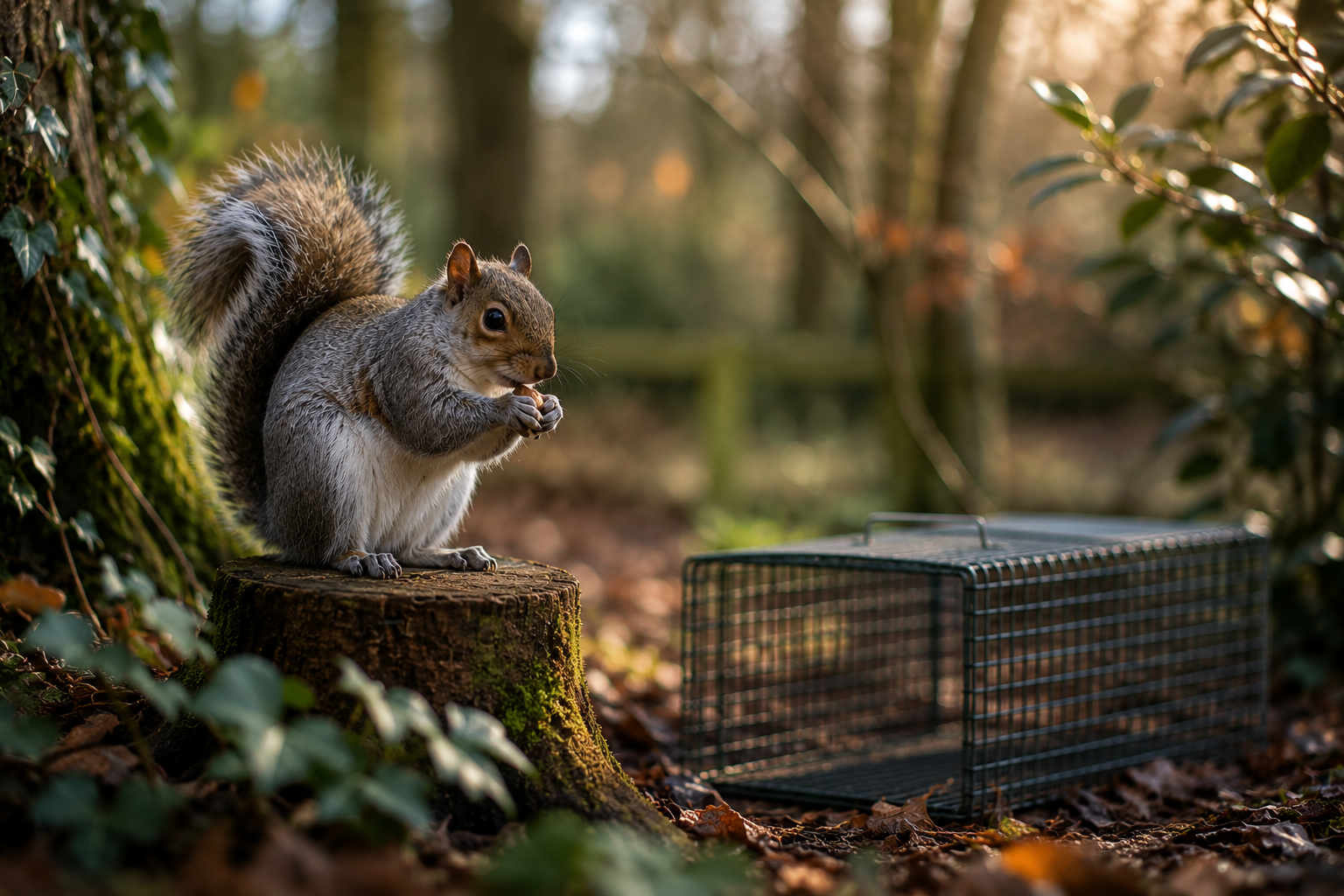
For landowners, woodland managers and homeowners dealing with repeat squirrel damage, understanding the best months for grey squirrel trapping can make control work more effective, more humane and less wasteful. Grey squirrels remain a persistent issue across much of the UK, particularly where they damage young trees, strip bark, enter roof spaces or put pressure on nesting birds.
Trapping is not something to approach casually. It needs the right equipment, legal awareness and a sensible plan. Timing is one of the biggest parts of that plan because squirrel behaviour changes through the year.
Why Grey Squirrel Activity Changes Through The Year
Grey squirrels do not behave the same way in every season. Their movement, feeding patterns and interest in bait are shaped by food availability, breeding cycles, weather and shelter needs.
During periods when natural food is plentiful, squirrels may be less inclined to investigate traps. In autumn, for example, they often focus on nuts, seeds and other natural food sources. This can make baited traps less attractive unless they are placed carefully in areas where squirrels are already active.
In colder months, food pressure can increase. Squirrels may spend more time searching for reliable feeding spots, especially where gardens, feeders, outbuildings or woodland edges provide shelter and regular food. This can create better opportunities for trapping, provided the work is done responsibly and checked frequently.
Winter And Early Spring Often Provide Better Conditions
Many people find that winter and early spring are among the most practical periods for grey squirrel control. Vegetation is thinner, movement routes are easier to identify, and squirrels may be more responsive to bait due to reduced natural food availability.
This timing can also help protect trees before the most damaging periods of bark stripping. In UK woodlands, grey squirrels can cause serious harm to broadleaf trees, particularly younger stems and high-value species. Damage is often associated with spring and early summer, so reducing numbers before pressure increases can be more effective than reacting later.
For homeowners, winter can also reveal roof-space activity more clearly. Scratching noises, chewed entry points and activity around lofts or eaves can become more noticeable when squirrels seek warmth and shelter.
Summer Trapping Can Be More Difficult
Summer is not always the easiest time to trap grey squirrels. Natural food is more available, gardens are busier, and dense foliage can make movement routes harder to track. There may also be more non-target wildlife activity, which means trap placement and monitoring need even more care.
That does not mean summer control is never needed. If squirrels are causing immediate damage, entering a property or creating a safety concern, action may still be appropriate. However, it should be planned carefully rather than treated as a quick fix.
In domestic settings, summer can also bring distractions such as open bins, bird feeders, fruit trees and outdoor dining areas. Removing easy food sources may be just as important as setting traps.
Legal And Humane Responsibilities
Grey squirrel trapping in the UK comes with responsibilities. Live traps must be checked regularly, and anyone trapping must understand what can and cannot legally be done with captured animals. Grey squirrels are classed as an invasive non-native species, so they cannot simply be released elsewhere.
Humane dispatch, trap choice, placement and inspection routines all matter. Poor practice can cause unnecessary suffering, catch non-target animals or create legal problems. If someone is unsure, they should seek proper guidance before setting any trap.
It is also important to consider neighbours, pets and public access. A trap placed in the wrong area can create avoidable risk. Good control work is discreet, targeted and properly monitored.
Building A Seasonal Control Plan
The most effective approach is usually seasonal rather than reactive. This might involve monitoring activity in autumn, trapping during winter and early spring where appropriate, reducing access to food sources, blocking property entry points once squirrels are no longer inside, and protecting vulnerable trees before damage escalates.
A simple activity log can help. Noting where squirrels are seen, when damage appears, and which routes they use can make trapping more precise. It also avoids unnecessary effort in places where activity is occasional rather than established.
Grey squirrel control works best when timing, observation and responsibility come together. By planning around seasonal behaviour, rather than setting traps at random, property owners and land managers can make better decisions and reduce problems more effectively.